
Welcome
Mission Statement
Least Tern Project
Ancient Canoe Project
Officers and Board
History of Friends
Calendar
Stories About
Join Us!
Photo Slide Show
Volunteer Opportunities
Links
Newsletters
Donations and Memorials
Gift Shop
Email Me

March 1, 2011

After nearly three years of planning and permitting, the day finally arrived to extract the ancient canoe! The day began at dawn, on low tide, with the building of a coffer dam made of sandbags to keep the tide from coming in on the worksite.

Next, a team of archeologists, volunteers and environmental scientists led by AWIARE (the Alliance for Weedon Island Archeological Research and Education), and environment specialists from Pinellas County Department of Parks and Resources carefully began excavating the canoe using hand trowels in order to remove the muck covering the canoe.

When my dad and I joined the team, after a mile-long kayak trip in the driving rain to the undisclosed site within the Weedon Island Preserve, the team had the canoe fully exposed and ready to begin the excavation process. It was then that I realized for the first time how long this vessel really was – over 40 feet (impressively long when compared to my 9 foot kayak)! That must have been something to operate in the choppy waters of Tampa Bay without tipping over!

The team continued the extraction process by cutting the canoe into four ten (10) foot sections to aid in its removal and transportation without damaging it. Each of the four sections were removed and loaded onto a county work boat which was anchored nearby.

Leaving no trace, the team then began the process of transporting the canoe back to the Weedon Island Preserve’s maintenance area where the canoe will be processed and preserved

Once back at the maintenance area, the team carefully removed each of the sections from the work boat and gently washed the sand and debris from the sections in preparation for placing them in a large vat where the chemical process of preservation will take place.

We also observed that the bottom of the canoe was covered in a peat-like matter, which had helped preserve the bark and outer covering of the canoe over the years… Mother Nature at her finest!

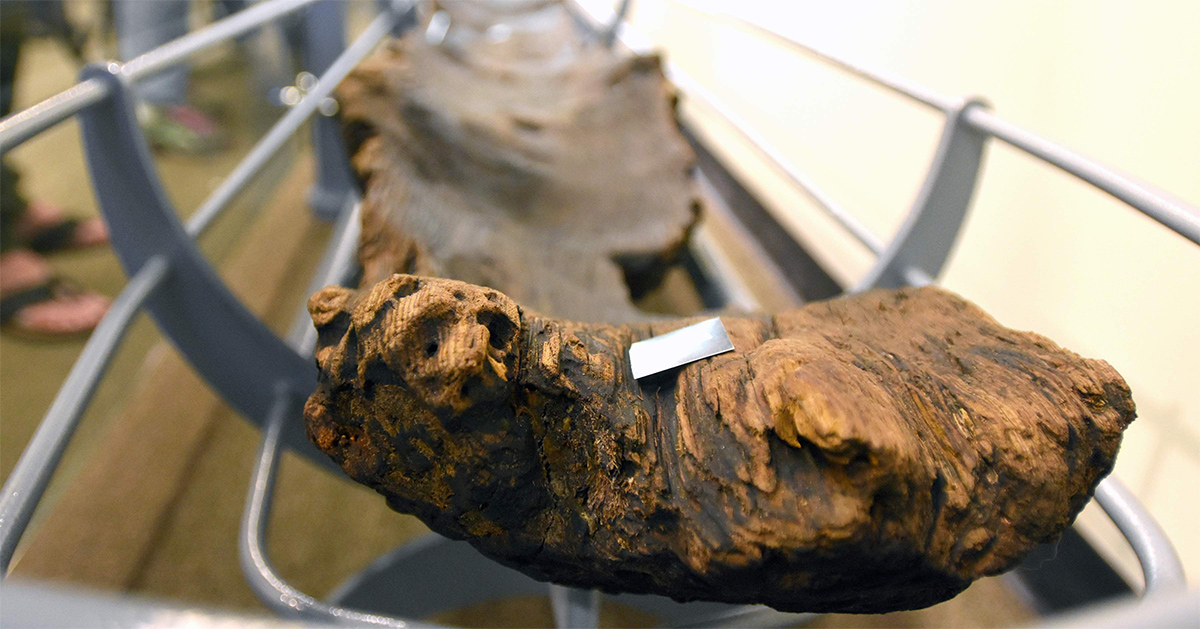
Once the sections were cleaned off, it was amazing how well preserved the canoe really was, considering it is over 1100 years old! The detail of the inside of the canoe where it had been hollowed out by burning and scraping is most impressive.

Now, the canoe sections will remain in the preserving vat for about two years. The final process will involve the use of a chemical called polyethylene glycol, a wax-like substance, which will harden and preserve the wood.

It was really a unique experience for me to be a part of this historical undertaking. Thanks to the enthusiasm and vision of all the team members working together to make the excavation and extraction a complete success! I can’t wait to see the canoe when its preservation is complete and on display in the Weedon Island Cultural and Natural History Center!


Webhosting

|Welcome| |Mission Statement | |Least Tern Project| |Ancient Canoe Project| |Officers and Board| |History of Friends| |Calendar| |Stories About| |Join Us!| |Photo Slide Show| |Volunteer Opportunities| |Links| |Newsletters| |Donations and Memorials| |Gift Shop|